To pose couples naturally, give them one clear action that suits them. Watch how they respond before you add more direction. You can often make a new photo by moving yourself while they continue that action.
That gives you a place to start. It also leaves room for the two people in front of you. They may be quiet, playful or a little unsure about the camera. Choose your next prompt from what you see.
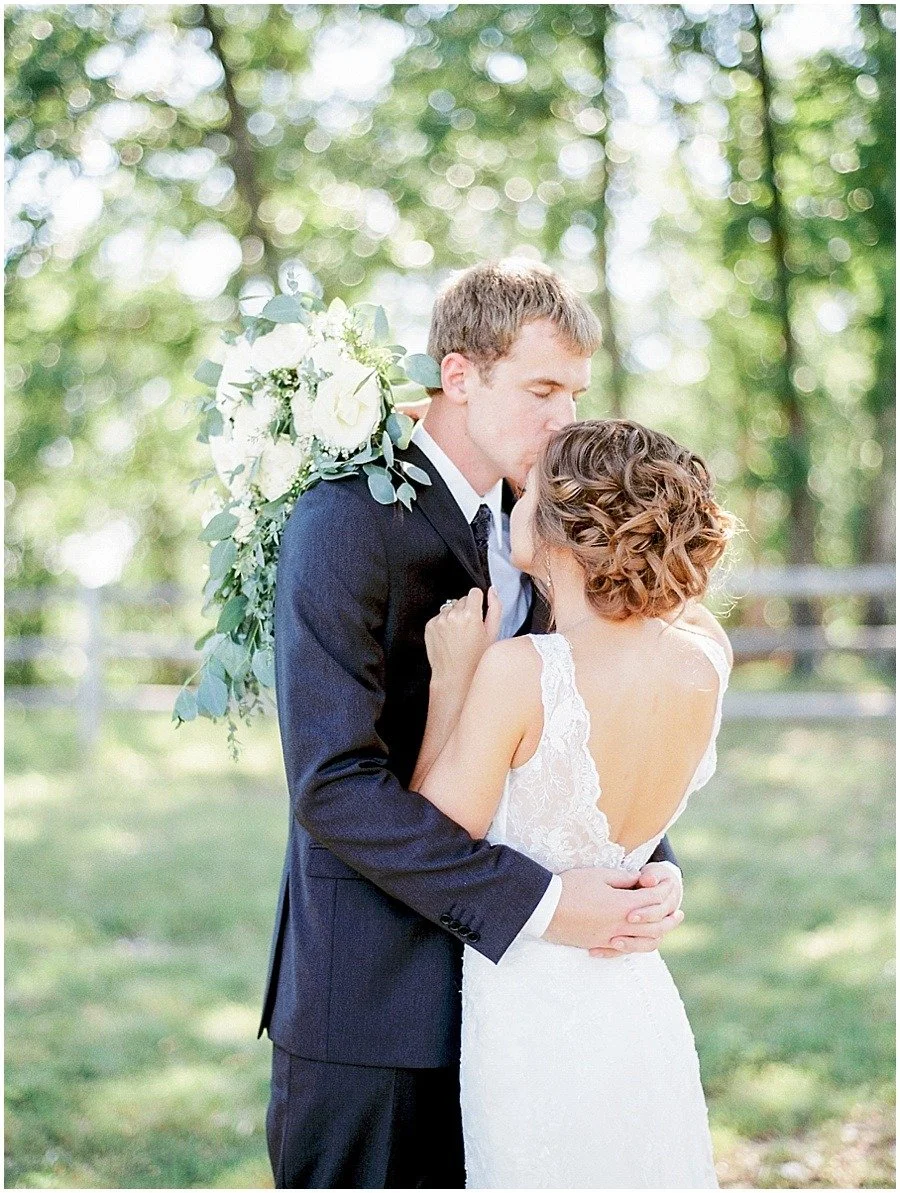
Start by looking at the couple’s arms, faces and space between them.
Start with an action the couple wants to try
Ask what feels comfortable. Holding each other, standing close or dancing may suit one couple. Another may prefer a little space or a quieter portrait. Leave room for them to say so.
Check the light before you begin. Pick a spot where you can see their faces and make the photo you want. Our lesson on choosing the direction of light for a portrait gives you a way to study that choice.
Then give one action in words they can follow. For example, ask them to hold each other. Let them settle before you adjust every hand or shoulder.
Study one prompt and what followed
In Jordan's original posing-flow lesson, she walks through portraits of Madalyn and Conner. She asked Madalyn to put an arm around Conner and asked him to kiss her forehead.
Jordan explains that she did not tell him where to put his hands behind her. That part of the pose came from him. The photo gives you a useful question for your own work: which parts need your help, and which parts are already working?
Look at the couple's arms, the space between them and the direction of their faces. Use what you can see to decide whether another instruction would help.
Keep the next prompt small
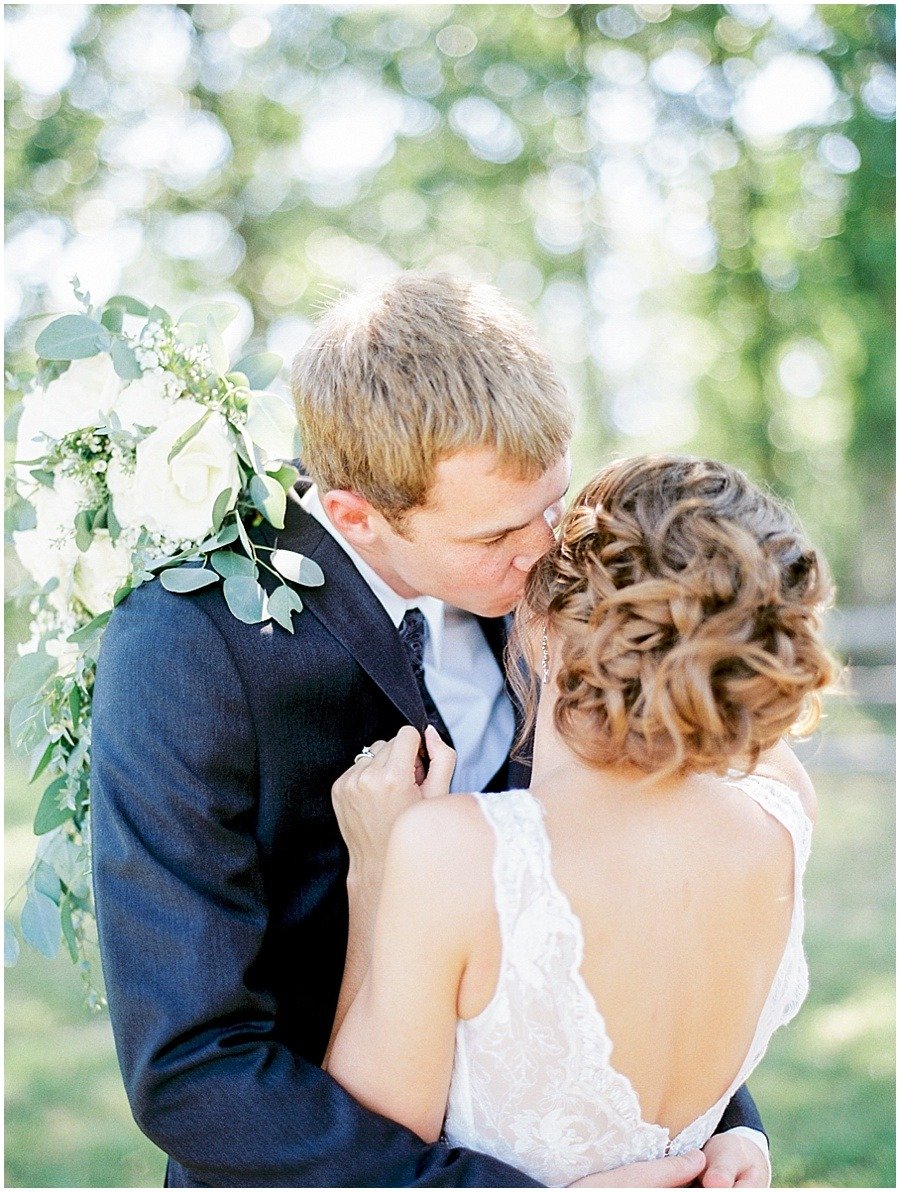
A small change in the action keeps the couple close.
In the same sequence, Jordan asked Conner to kiss Madalyn's cheek. She then asked for the other cheek while taking a few steps toward them.
The couple did not need to build a new pose from the start. One action led into another. Jordan also changed her voice to fit the quieter moment as she moved closer.
You can study that choice without repeating the exact series at every shoot. If a couple is comfortable holding each other, one small prompt may be enough. If they pause or seem unsure, give a clear next action and see how it feels to them.
Move your camera before you rebuild the pose
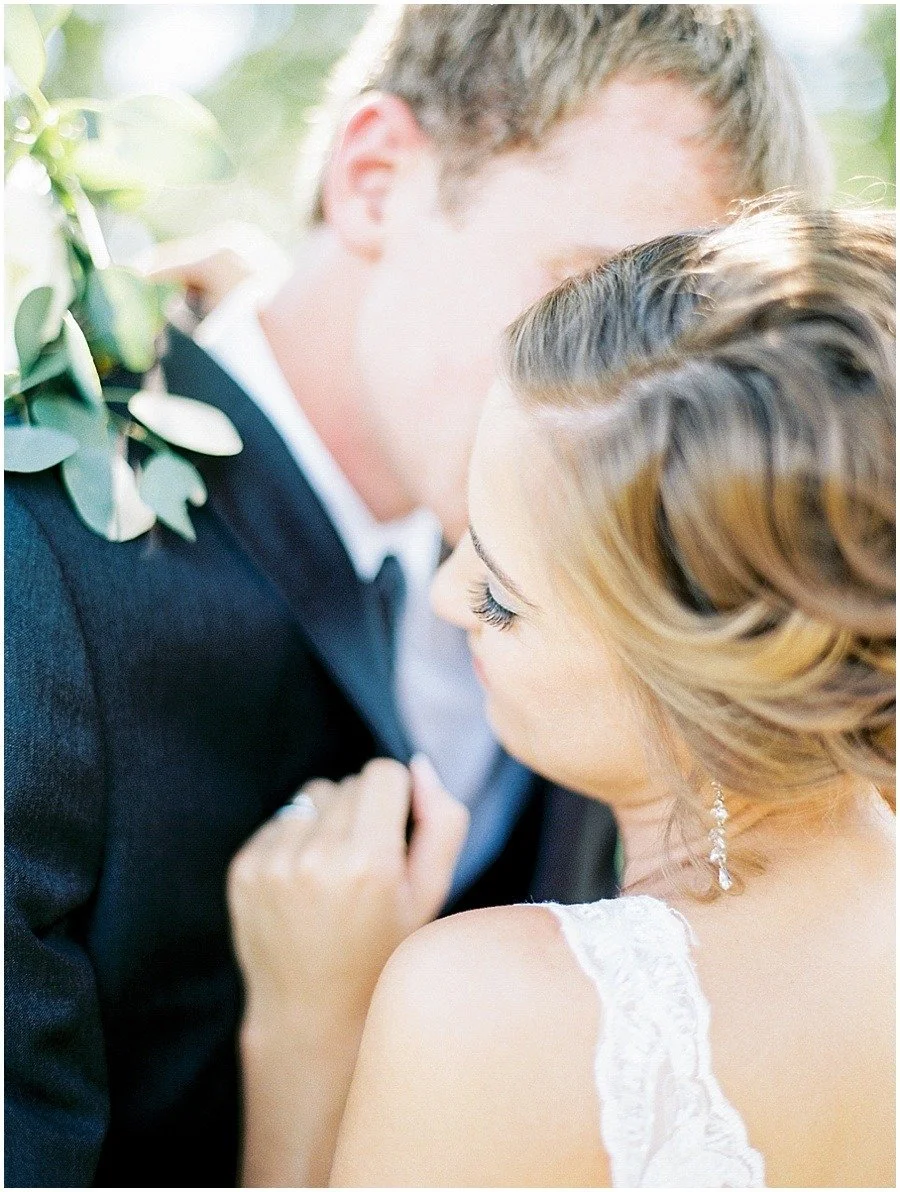
A closer frame shows faces and hands in more detail.
When something is working, look for another frame. Take a wider photo that includes the setting. Move closer for their faces or hands if there is room to do so.
The photos here come from the same published portrait sequence. Notice how the framing changes as the couple stays close. A close frame gives their faces more space in the photo. A wider frame shows more of their bodies and the place around them.
Camera position is a separate choice from the couple's action. Our lesson on lens choice and portrait distance helps you explore that part. These photos are not a controlled lens comparison, and no focal length is being claimed for them.
Watch before adding another instruction
Keep looking after the prompt. The couple may turn toward each other, change their grip or smile after the action ends. You can photograph those changes without talking through all of them.
Check that you can still see the parts you want to show. If an arm blocks a face or the couple needs help, give one useful adjustment. Keep your words clear and give them time to respond.
A quiet expression can belong in the set, too. You do not need a laugh in every frame. Let the couple's comfort and the purpose of the photo guide what you ask next.
Practice one prompt at your next portrait session
With a willing couple, choose an action that feels comfortable to them. Tell them what you would like them to do, then make a few photos.
- Make one frame from your starting position.
- Change your framing while the action continues.
- Keep watching as the action ends.
Review the photos together if that fits the session. Which frame shows the connection you wanted? Where did you need to help? Where did the couple find their own position?
Use that answer to choose the next prompt. The goal is to learn how to respond to people, rather than finish a fixed list of poses.
Questions about posing couples
What should I say when a couple feels stiff?
Offer one clear action they feel comfortable trying. Avoid stacking several body instructions at once. Watch their response and adjust from there.
Do I need a list of poses?
A few ideas can help you prepare. Leave room to choose what fits the couple. Jordan's source lesson describes a flow that changes with each pair.
What if a couple does not want to kiss or dance?
Choose something else. Standing together, looking at each other or holding hands may fit them better. Ask rather than assume.
How many photos can one prompt give me?
There is no set number. Change your framing when it helps, and stop or give a new prompt when the moment needs it.