For sharp photos of moving people, choose a shutter speed fast enough to record the action the way you want. Take a photo, check the moving parts and adjust. The right speed depends on the movement and how it appears in your frame.
Start with the result you want. You might want a sharp face as someone walks toward you. You might want a little movement in a dress during a turn. Those are different choices, even in the same light.
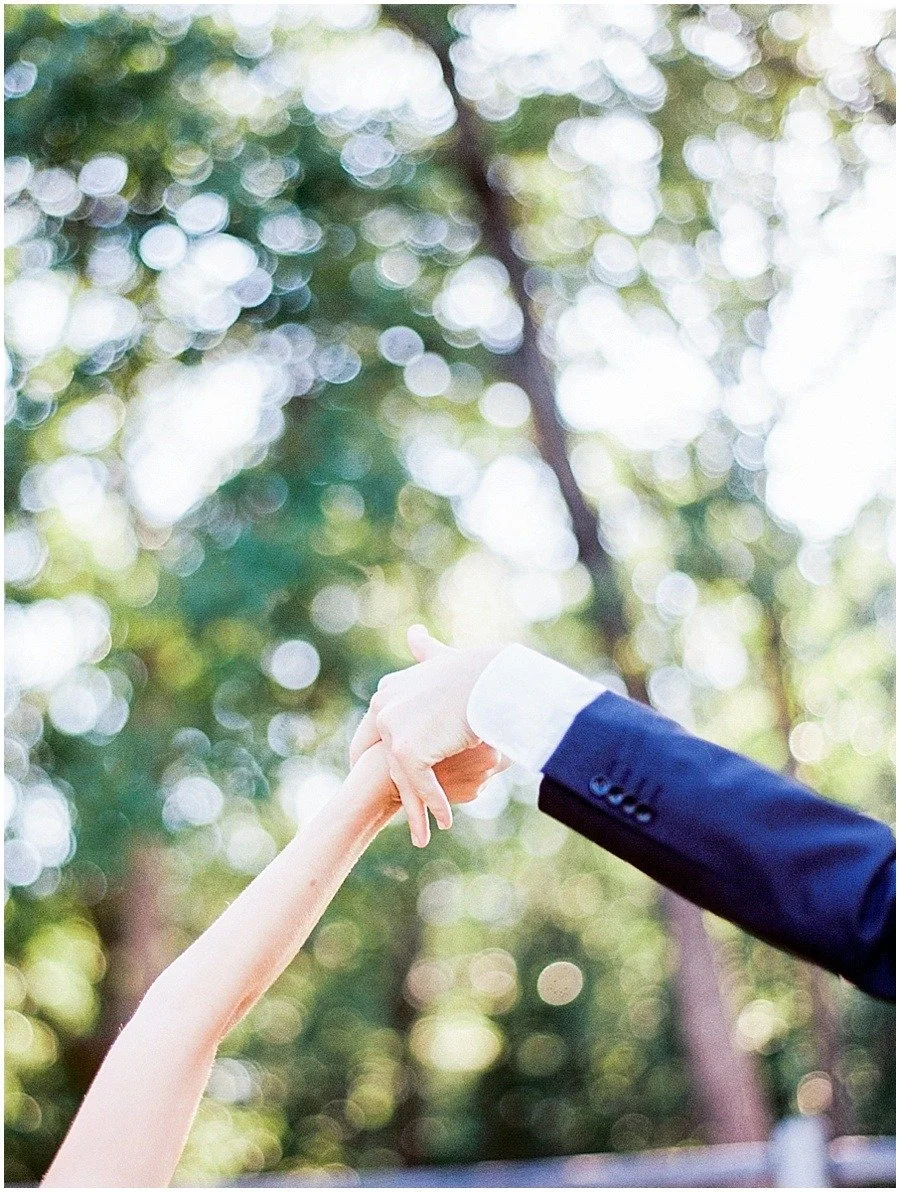
Watch the hands and dress as the bride turns.
Check what looks blurred
Look at the face, hands and feet. Then look at a still part of the scene. If a hand looks streaked while the wall behind it looks clear, subject movement may be the problem.
If the whole frame looks smeared, check how you are holding the camera. If the background looks sharp but the face looks soft without a clear streak, check where the camera focused. A faster shutter does not move the focus point onto the face.
These clues help you choose a first test. They do not prove the cause from one small screen view. Enlarge the part that matters and look at several frames.
Choose whether to freeze the action
Shutter speed describes how long the camera records light for a photo. A shorter time gives a moving subject less time to travel during that exposure. A longer time can show more movement as blur.
Nikon's motion lesson explains this choice. Neither result has to be the goal for every photo. Choose what helps you show the person and the action.
The dance photo in this lesson comes from Jordan's published posing sequence. Use it to study the movement of the couple and the framing. No shutter speed is being claimed for this file.
Make a faster-shutter test
If you want less motion blur, try a faster shutter. For example, 1/500 second records a shorter time than 1/250 second. That pair gives you a useful test; it does not promise a sharp result for every person or action.
Ask a willing person to repeat a comfortable action, such as walking across a clear space. Keep your position and framing similar. Focus on the person, take a frame, change the shutter speed and try again.
Compare the moving parts. Does the face show the detail you wanted? Do the hands still look blurred? Use the answer to choose another speed.
Check brightness after changing the shutter
In manual exposure, a faster shutter lets in less light when aperture and ISO stay the same. Your next photo may look darker. Review the subject as well as the motion.
You can adjust aperture or ISO to reach a useful exposure. Keep your other needs in mind. A wider aperture can change how much appears in focus. Check the image as you adjust ISO, especially when the light is limited.
Jordan's brighter-photos lesson treats ISO, aperture and shutter speed as connected choices. Here, the moving subject gives you a reason to protect the shutter speed you need while you revisit the others.
If there is not enough light for the result you want, consider a brighter position or a slower action. Our portrait light-direction lesson helps you choose where to place the person.
Change the photo, then check again
A new framing or camera position can change how movement appears. A person passing close across your frame may need a different test from someone walking farther away.
Review again when you move closer, change the action or switch lenses. The portrait-distance lesson gives you a way to study framing and position as separate choices.
You can also watch for a pause in the action. A person may slow down at the end of a turn. That may fit the photo you want better than the fastest part of the movement.
Practice with one action and three frames
- Choose a comfortable action and a clear space.
- Take a photo at your starting shutter speed.
- Try a faster speed, check exposure and repeat the action.
- Use what you see to choose the third frame's settings.
Write down the shutter speed for each photo. Compare the face, hands and background. Keep the result you prefer and name what made it work.
Questions about shutter speed and movement
Is 1/500 second fast enough?
It can be a starting test. The action, distance and framing still matter. Check the actual photo before relying on that speed.
Will raising ISO stop motion blur?
Raising ISO alone does not shorten the exposure time in manual mode. It may help you use a faster shutter while keeping useful image brightness.
Should every part of a moving portrait be sharp?
Choose what matters to the photo. A sharp face and a moving dress can be a deliberate result. Check that the blur supports what you want to show.